Let’s be honest, the world of Non-Destructive Testing (NDT) has always been a domain of sharp-eyed experts. It’s about the veteran technician who, through years of experience, can spot the subtlest hint of a crack in an X-ray film or hear the faintest change in pitch during a tap test. It’s an art. But what if that seasoned expert could have a partner that never gets tired, never loses focus, and has seen millions of defects?
That partner is here. It’s Artificial Intelligence (AI), and it’s not here to replace our inspectors it’s here to empower them. Having integrated some of these tools into our workflow, I’ve seen firsthand that we’re on the cusp of the most significant shift in NDT since the move from film to digital radiography.
From Human Interpretation to Augmented Intelligence
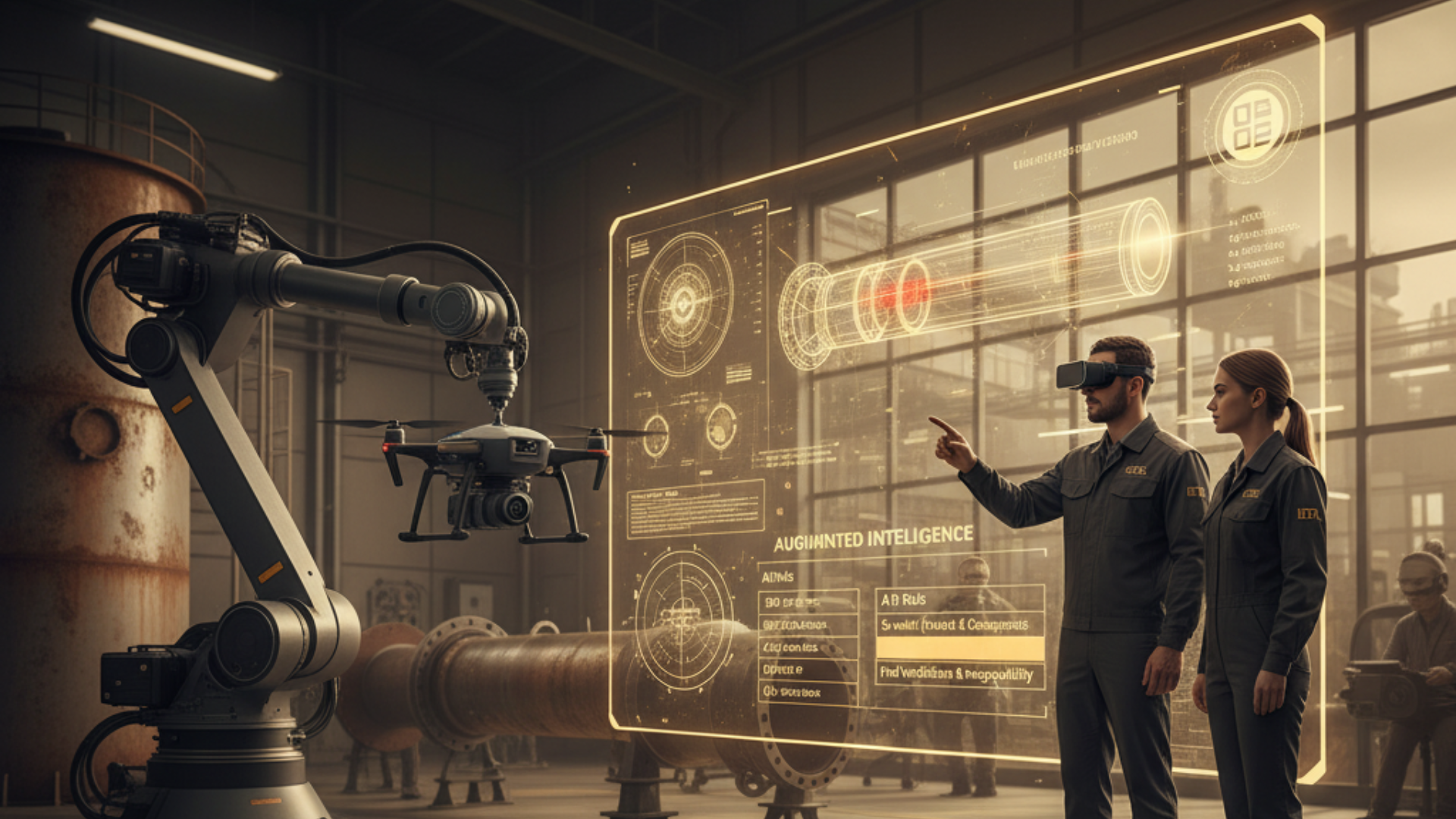
Traditional NDT relies heavily on human interpretation. Whether it’s analyzing a ultrasonic C-scan, reviewing phased array data, or interpreting eddy current signals, the inspector is the final arbiter. This is effective, but it’s also subject to human factors: fatigue, varying experience levels, and the simple challenge of maintaining focus over hundreds of nearly identical components.
AI, specifically machine learning, flips this model. We can now train algorithms on vast datasets of NDT results thousands of images and signals that we, as a lab, have collected over the years. We feed it “good” parts and “bad” parts with known flaws. The algorithm learns, with incredible speed and precision, the digital “fingerprint” of a defect.
Real-World Applications: AI in the Field and Lab
This isn’t just a lab experiment. AI is solving real problems right now.
- Automated Flaw Detection in Radiography (X-ray/CT)
Manually scanning thousands of weld images for porosity, cracks, or inclusions is a monumental task. An AI-powered system can pre-scan these images in seconds, flagging potential anomalies for the inspector’s review. It doesn’t guess; it calculates probability. This doesn’t remove the inspector; it directs their attention to the areas that need it most, dramatically increasing throughput and reducing the risk of a missed call.
- Unlocking the Full Potential of Phased Array Ultrasonic Testing (PAUT)
PAUT generates incredibly rich, complex datasets. Interpreting the B-scans, C-scans, and S-scans can be like solving a 3D puzzle. AI algorithms can be trained to recognize specific flaw types within this data—differentiating between a lack-of-fusion and a slag inclusion, for example, based on their unique signal characteristics. This provides a level of consistency in call-making that is difficult to achieve across multiple human inspectors.
- The Rise of Autonomous Robotic Inspection
Pair AI with robotics, and you have a game-changer. Imagine a drone autonomously scanning the underside of a bridge or a large storage tank. Using LiDAR and cameras, it navigates the structure. Meanwhile, its onboard AI analyzes live video feed for corrosion patterns or crack indications, creating a real-time map of structural health. This removes personnel from dangerous environments and makes large-scale inspections faster and more comprehensive.
The Human Element: Why the Inspector is More Important Than Ever
With all this talk of algorithms, you might wonder about the role of the human inspector. Let me be clear: their role is evolving, not diminishing.
The AI is a powerful screening tool. It’s fantastic at answering “Is there an anomaly?” and “Where is it?”. But the human expert is still essential for answering the most critical question: “So what?”
Context and Consequence: An AI might flag a tiny discontinuity. The inspector, with their understanding of material science, stress loads, and the component’s service history, can determine if that flaw is relevant. Is it a cosmetic issue or a critical failure point?
Handling the Unusual: AI is trained on known defects. When a completely new, never-before-seen type of flaw appears, the AI might be stumped. The human inspector, with their fundamental knowledge and problem-solving skills, can investigate and understand it.
Final Verification and Responsibility: The inspector remains the final authority. The AI provides a recommendation, but the certified inspector makes the call and signs the report, taking professional responsibility for the outcome.
The Future is a Collaboration
The future of NDT isn’t a choice between human and machine. It’s a powerful collaboration. At our lab, we see AI as the ultimate assistant one that handles the tedious, data-intensive work of searching, allowing our skilled inspectors to focus on the complex, high-level tasks of analysis, judgment, and decision-making.
This partnership makes inspections faster, more reliable, and more consistent. It allows us to provide you with a deeper level of insight into the integrity of your assets, ensuring they are safer and more reliable than ever before. The art of inspection is becoming a smarter science.