
Non Destructive Testing, commonly referred to as NDT, involves examining a material, component, or structure without causing damage to it.
Different methods can be used to observe or identify conditions within a material while allowing the item to remain available for further use. The method selected depends on the material, component, and type of examination required.
The Industrial Development and Testing Laboratory carries out NDT related inspection work for different types of materials and components.
The laboratory is located in Kolkata, West Bengal. Enquiries and work may also come from organisations situated in other parts of the country, including Delhi, Mumbai, Chennai, Bangalore, Pune, Ahmedabad, Hyderabad, Coimbatore, Vadodara and other locations.
The appropriate method and procedure can be discussed based on the component, material and purpose of the examination.
What is NDT (Non-destructive Testing)?
Non Destructive Testing, or NDT, refers to methods used to examine materials, components, and structures without permanently changing or damaging them.
Depending on the method used, an examination can provide information about the surface or internal condition of a material. Some methods can also be used to take measurements or identify particular features within a component.
NDT is a general term that covers several inspection methods, instruments, and procedures. The method selected depends on the material, shape, condition, and purpose of the examination.
The results can be used to understand the condition of a component without requiring it to be cut, dismantled, or otherwise altered for the examination.
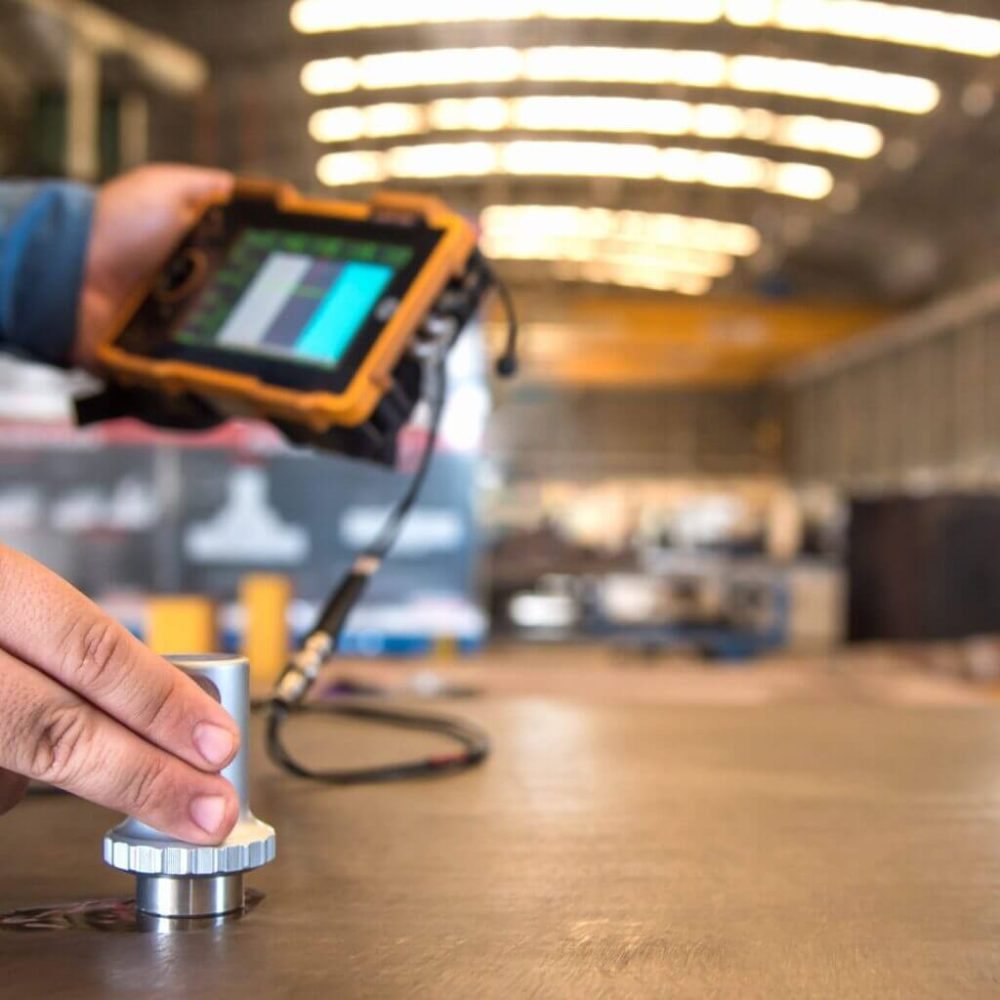


NDT can be used to examine a component without causing permanent damage to it.
Depending on the method, an examination may be used to:
- Identify visible or internal irregularities
- Check welds and joints
- Measure material thickness
- Examine the condition of a component
- Observe changes within a material
Since the component does not normally need to be damaged during the examination, the same item can continue to be used after the work is completed, where appropriate.
These methods are used in different fields, including construction, manufacturing, aerospace, oil and gas, and power generation.
- The laboratory carries out different types of NDT examinations according to the material and the nature of the work.
- The method and equipment used depend on the component being examined and the information required.
- Established procedures are followed during the examination, and the observations and measurements obtained are recorded in the test report.
Non Destructive Testing Methods
Magnetic Particle Flaw Detection
Dye Penetrant Testing
Industries Served
The laboratory works with organisations involved in different technical and industrial activities.
Work may be received from companies in manufacturing, engineering, construction, infrastructure, and other fields where examination of materials or components is required.
Organisations associated with different locations have approached the laboratory over time. These include Delhi, Mumbai, Chennai, Bangalore, Pune, Ahmedabad, Hyderabad and other parts of the country.
The nature of the work varies depending on the component, material, and examination required.
Why Industries Choose Our Non Destructive Testing Laboratory
The laboratory has facilities for carrying out different types of non destructive examinations.
Equipment suitable for the required examination is used according to the material and component being inspected.
The examinations are carried out by personnel familiar with the applicable inspection methods and procedures.
Established procedures are followed during the examination, depending on the method being used.



Contact Our Non Destructive Testing Laboratory
For professional NDT inspection services, material integrity evaluation, or industrial component testing, connect with The Industrial Development and Testing Laboratory.